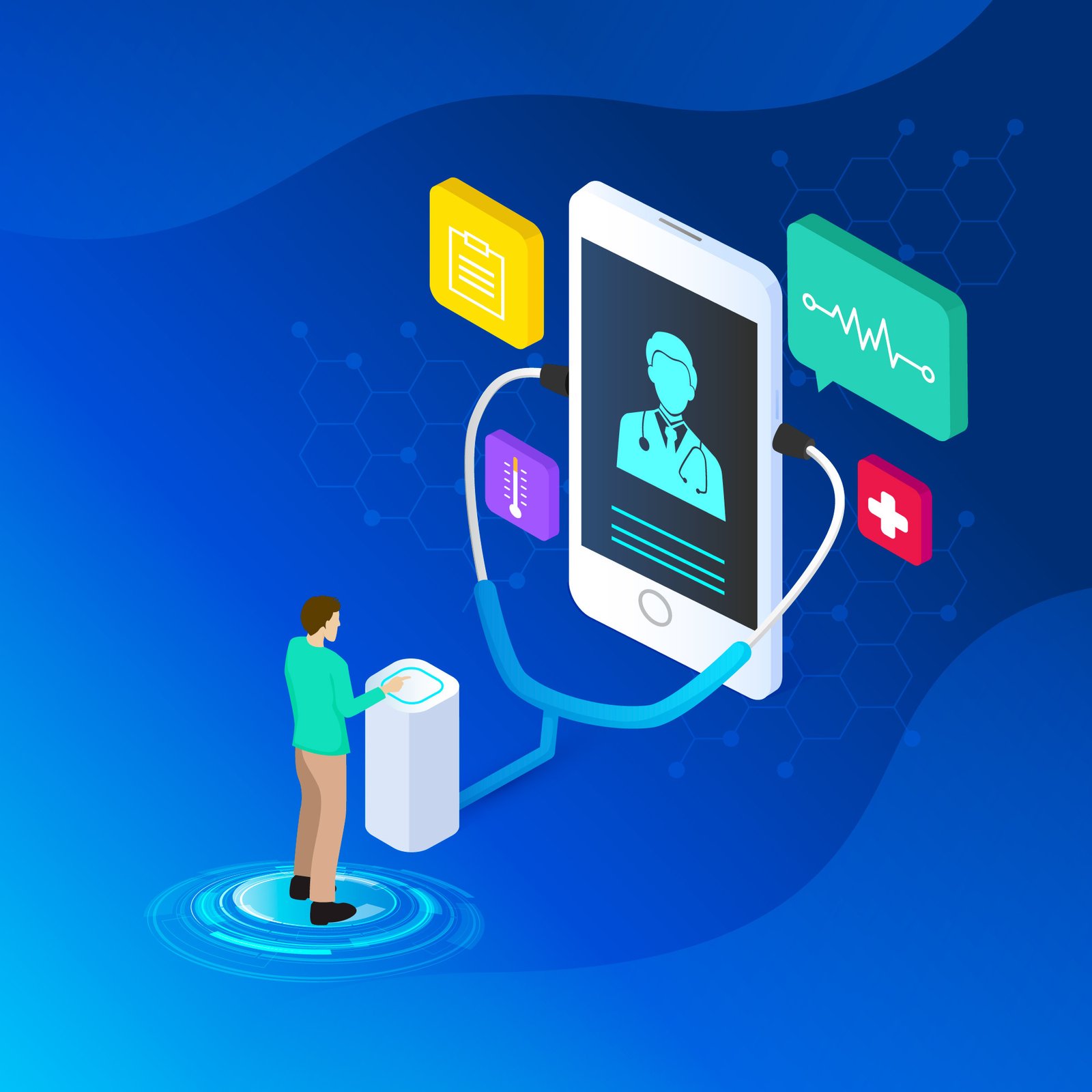

It allows transmission of radiological images, such as MRIs, CT scans, and X-rays, from one location to another for instant interpretation. This digital revolution has reduced the burden on radiologists by facilitating the transmission of medical imaging remotely for faster, real-time diagnosis. Over the years, Picture Archiving and Communication Systems (PACS) have laid the groundwork for teleradiology to interpret imaging data and streamline the workflows. However, slow network speeds and the need for radiologists to manually interpret data may delay the process, regardless of its urgency in the treatment.
Therefore, to address this concern, the next-gen technologies, such as artificial intelligence and machine learning, are redefining virtual diagnosis. The integration of artificial intelligence into teleradiology is improving diagnostic accuracy, offering real-time data interpretation, and optimizing workflow. This significant shift from traditional PACS to next-generation AI-integrated PACS has set the benchmark for the healthcare industry. It helps to mitigate the shortage of radiologists and empowers remote diagnosis to offer precise treatment. Let’s delve deep into the next-gen technologies that are reshaping the teleradiology sector.
PACS: The Fundamental Backbone of Teleradiology
Teleradiology was enabled by the picture archiving and communication system, which laid the digital groundwork for online medical imaging. In the past, radiologists have been relying on film-based imaging methods. At present, PACS converts the data processing of healthcare imaging from different modalities, such as CT scans, X-rays, and MRIs. With such digital unification, radiologists can legally perform medical imaging tests from any location, thus ensuring that a radiology department from a remote hospital, an emergency room, or a night shift can be accessed at any time. Several other significances are as follows:
- Centralized Storage: PACS has created a centralized storage system to digitally archive the patients’ medical imaging data. It is useful to eliminate the need for manual data retrieval and storage processes.
- Better Accessibility: Picture archiving and communication systems offer radiologists instant access to medical imaging data from multiple locations. This fosters greater accessibility and collaboration between multiple hospitals and patients, and improves workflow.
- Improve Data Inspection: Digital images can easily be manipulated, such as contrasted, zoomed, and measured to provide more accurate information.
The AI Revolution: Beyond the Limitations of PACS
While PACS has been the backbone of teleradiology services, there is a need to integrate it with artificial intelligence. The foremost reason is the rising complexity of medical images and the high volume of medical imaging data, which takes a considerable amount of time to analyze and interpret. Additionally, the need for manual interpretation of data by radiologists has further solidified the demand for the integration of AI in teleradiology. Several other reasons to combine AI with PACS are listed below:
- High Data Accuracy: The AI integrated PACS has the potential to analyze vast amounts of data and identify subtle patterns that might be skipped by the human eye. This integration is useful to enhance data accuracy and reduce the risk of false negatives.
- Optimize Workflow: Radiologists often face a significant burden of medical imaging due to the growing incidence of chronic conditions. With a manual approach, it is difficult to interpret large amounts of imaging data, and there is a high chance of human error. Artificial intelligence can help in optimizing workflow and automating repetitive tasks, which significantly reduces the overall burden on radiologists.
- Urgent Case Prioritization: The integration of artificial intelligence can analyze the urgent cases and push critical cases to the top of the radiologist’s worklist. With this approach, radiologists can immediately focus on urgent cases, which further reduces the turnaround time for diagnostics.
Next-Gen Technologies: The Future of Teleradiology
The convergence of artificial intelligence and PACS is just the beginning of innovation in teleradiology platforms. The industrial players in teleradiology are focusing on cutting-edge technologies to create a seamless ecosystem for remote disease diagnosis.
- Cloud-Based PACS: In the future, cloud-based PACS systems will be the cornerstone of teleradiology services. They are cost-effective, allow large data storage, and provide instant access to data.
- Vendor Neutral Archives (VNAs): They act as a centralized data storehouse. This allows healthcare systems to access and share images from multiple locations or original PACS vendors, offering greater interoperability to the radiologists.
- Fully Integrated Platforms: The future of teleradiology will lie in fully integrated platforms, where teleradiology systems, artificial intelligence, electronic health records, and hospital information systems will work together to build a seamless communication system. This integration allows radiologists to access patients’ medical histories immediately, providing detailed context for diagnosis.
- AR / VR for Advanced Visualization: Next-generation technologies will extend beyond 2D imaging for advanced visualization of medical imaging. In the future, the industry players will focus on integrating augmented reality and virtual reality to explore anatomical structures. Notably, the emergence of augmented and virtual reality helps in improving data visualization, which further aids in facilitating treatment and surgical planning.
Challenges With Next-Gen Technologies
Despite a promising future, the next-gen technologies may face several challenges that hinder the adoption of teleradiology. Some of the notable challenges are listed below:
- Data Validation and Security: AI algorithms rely on open-source networks to collect data, which creates data security issues. Therefore, it is crucial to rigorously validate the data security and safety measures. In addition, clinicians and industry players are required to adopt standard gold healthcare cybersecurity services to ensure data security, reliability, and acceptance by radiology professionals.
- Seamless Integration: The second challenge is the complexity associated with integrating PACS and AI with existing infrastructure. It is important to note here that teleradiologists must ensure that AI is integrated with existing PACS and RIS infrastructure without disrupting the connectivity and workflow. In addition to seamless integration, it is important to focus on a customizable, user-friendly interface and greater interoperability.
- Complex Regulatory Framework: Although USFDA is approving AI technologies for the healthcare industry to improve treatment outcomes, the standard guidelines for AI algorithm approval may create challenges for the teleradiology platform providers.
Conclusion
Essentially, the use of next-gen technology not only opens the remote diagnosis but also improves patient outcomes. This alliance extends access to teleradiology services in underdeveloped areas; thus, medical specialists are enabled to provide optimal treatment based on imaging data. In addition, the merger of AI and PACS is indeed upscaling the workflow of radiologists, keeping them productive. Despite immense potential, several challenges like the security of user data and the difficulty in integrating with existing PACS systems need to be addressed for a bright future of teleradiology.
References
- https://www.wipro.com/pharmaceutical-and-life-sciences/the-future-of-medical-imaging-how-ai-enhanced-pacs-is-revolutionizing-radiology-for-improved-patient-outcomes/#:~
- https://www.lifetrackmed.com/en/radiology-reading-room/how-ai-is-transforming-pacs#:~
- https://www.ramsoft.com/blog/integrate-ai-with-ris-pacs#:~
- https://nextgeninvent.com/blogs/integrating-and-adopting-ai-in-radiology-workflow/



Leave a Reply