
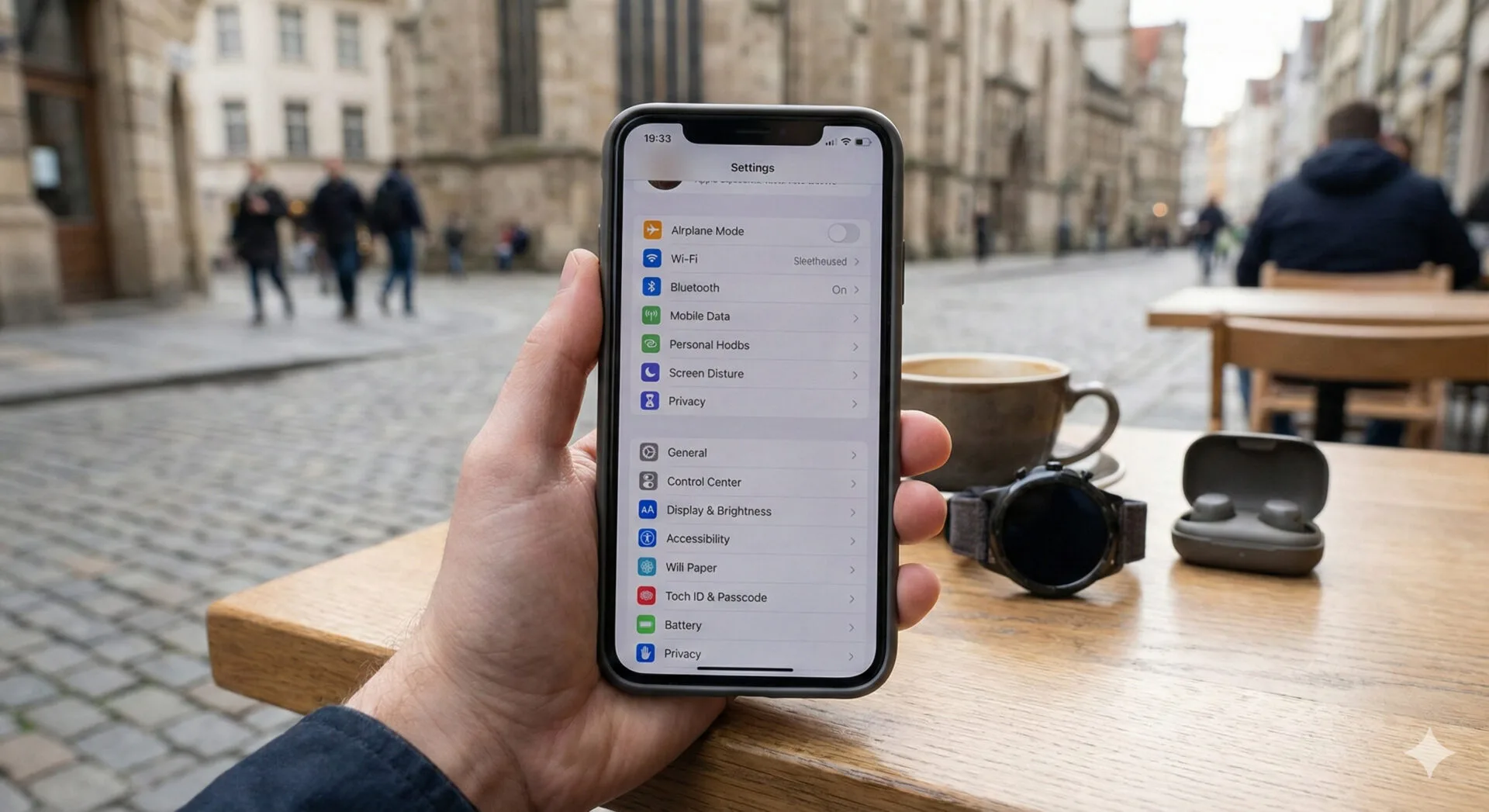

Apple opens the door—slightly—to third‑party accessories in Europe
Apple’s next iOS update, iOS 26.3, is set to make it easier for iPhone and iPad owners in the European Union to use third‑party accessories. According to beta release notes reported by MacRumors and summarized by Engadget, the software will introduce proximity pairing and notification forwarding for non‑Apple devices—but only within the EU.
The changes are part of Apple’s ongoing effort to comply with the EU’s Digital Markets Act (DMA), landmark legislation designed to curb the power of so‑called “gatekeeper” platforms and foster more interoperability and competition.
An EU Commission spokesperson framed the move as evidence that the DMA is working, telling The Wall Street Journal that the rules are creating “new opportunities for developers” and moving Europe toward “a more inter‑connected digital ecosystem.” The Commission expects the new functionality to be fully available across the bloc in 2026.
What’s actually new in iOS 26.3
The iOS 26.3 beta introduces two main capabilities in Europe:
- Proximity pairing for third‑party accessories
- Notification forwarding to third‑party wearables
While neither feature fundamentally overhauls how iPhones work with non‑Apple hardware, together they chip away at one of the most important pillars of Apple’s strategy: tight integration between its devices and services.
Proximity pairing: AirPods‑style simplicity for others
Under iOS 26.3 in the EU, compatible third‑party accessories—such as earbuds, headphones and potentially other Bluetooth‑based devices—will be able to use proximity pairing with iPhones and iPads.
Instead of digging through Bluetooth settings, users will be able to:
- Bring a supported accessory close to an iPhone or iPad.
- See an on‑screen prompt, similar to the familiar AirPods pairing card.
- Tap once to complete the pairing.
The feature appears to rely on NFC or Bluetooth Low Energy (BLE) beacons, much like Apple’s own pairing flows, but crucially it opens that experience up to third‑party brands—for example, a pair of Sony headphones or earbuds from Samsung.
Apple’s documentation so far suggests this is primarily a quality‑of‑life upgrade:
- It does not promise AirPods‑style automatic device switching between iPhone, iPad and Mac.
- It does not guarantee advanced ecosystem features like spatial audio profiles or head‑tracking.
Instead, proximity pairing is about reducing friction at the very first step: getting a new accessory connected without forcing users into deeper system menus.
Notification forwarding: third‑party watches finally get serious
The more consequential change is around notifications. For years, Apple has effectively reserved full notification integration for the Apple Watch, limiting what third‑party wearables can do when paired with an iPhone.
With iOS 26.3 in the EU:
- Third‑party smartwatches (including Wear OS devices) will be able to receive notifications forwarded from the iPhone.
- Users will be able to view and react to incoming notifications directly on these devices.
There are, however, clear constraints:
- Notifications can only be forwarded to one connected device at a time.
- Enabling notification forwarding to a third‑party device will disable notifications to an Apple Watch.
This design preserves a degree of platform preference. Users can either:
- Stick with an Apple Watch and retain the familiar first‑party experience, or
- Switch notification forwarding to a third‑party watch and accept that Apple’s own wearable will step back.
From a user perspective, this finally makes non‑Apple watches viable daily companions for iPhone owners in the EU. For Google’s Wear OS ecosystem and other smartwatch makers like Garmin or Withings, it opens a more level playing field—assuming they implement support for Apple’s new APIs.
Why this matters: DMA pressure and Apple’s “bare minimum” strategy
The DMA targets large digital platforms—Apple among them—that act as gatekeepers between businesses and consumers. It requires them to:
- Avoid self‑preferencing their own services.
- Open up certain interfaces and features to competitors.
- Allow more freedom around app distribution and payment systems.
Apple’s response so far has been highly calibrated. The company typically:
- Complies with the letter of the law.
- Adds new options that satisfy regulators.
- Retains as much commercial and technical control as possible.
Observers have noted that Apple often appears to be doing the “bare minimum” required, frequently justifying its stance on privacy and security grounds. In some cases, the company has even removed or limited features in Europe rather than extend them to third‑parties.
One prominent example: iPhone mirroring on Mac—a feature Apple has touted elsewhere—has been withheld or constrained in the EU, which conveniently avoids the need to make similar functionality available to Android phones or Windows PCs under interoperability rules.
The addition of proximity pairing and notification forwarding in iOS 26.3 fits this broader pattern:
- It addresses core DMA concerns about interoperability.
- It stops short of replicating the full Apple‑to‑Apple experience for rivals.
How this compares to Apple’s other regulatory concessions
The EU is not the only region pushing Apple to open up.
Brazil: third‑party app stores and external payments
In Brazil, Apple recently reached a settlement with competition regulator CADE that will require it to:
- Allow third‑party app stores on iOS.
- Permit developers to use external payment systems.
- Ensure warnings about alternative app stores and payments use neutral wording.
As reported by The Verge, Apple will still be able to charge fees, with a detailed structure that includes:
- 25% commission on in‑app purchases via the App Store (10% for some special programs).
- An additional 5% fee when developers use Apple’s payment system.
- No fee when purchases are routed outside the App Store via static, non‑clickable text.
- 15% fee when a button or link directs users to an external payment page.
- A 5% “Core Technology Commission” for apps distributed through alternative stores.
Apple has 105 days to implement these changes and faces potential fines of up to R$150 million (about $27 million) if it fails to comply.
In a statement to 9to5Mac, Apple again emphasized security and privacy risks, arguing that opening iOS “will open new privacy and security risks to users,” even as it pledged to maintain protections, especially for younger users.
Europe and Japan: alternative app stores already live
Europe’s DMA has already forced Apple to:
- Support third‑party app stores in the EU.
- Allow alternative payment options within apps.
Japan has pursued similar goals, pushing Apple to relax some of its App Store rules and open the door to competing distribution channels and billing systems.
The new proximity pairing and notification forwarding features in iOS 26.3 can be seen as the hardware‑adjacent counterpart to these software and services concessions: Apple is being nudged not only to open up app distribution, but also to reduce the friction that previously nudged users toward Apple‑branded hardware.
Impact on accessory makers and users
For accessory manufacturers
Third‑party hardware makers stand to gain in several ways:
- Lower onboarding friction: Proximity pairing makes it easier for users to complete the crucial first setup, reducing returns and support calls.
- Deeper integration: Notification forwarding gives smartwatches and similar devices a clearer value proposition when paired with iPhones.
- Marketing boost: Vendors will be able to advertise “one‑tap pairing with iPhone” or “full iOS notification support” in the EU, narrowing the experiential gap with Apple’s own accessories.
However, there are also limitations and uncertainties:
- Manufacturers must update firmware and apps to support the new features.
- Apple retains control over APIs and permissions, which can shape how rich or limited third‑party experiences feel.
- Region‑locking to the EU could create fragmented product experiences across markets.
For EU iPhone owners
For users, the changes will likely feel incremental but meaningful:
- Setting up new headphones or earbuds from brands like Sony or Bose should become faster and more intuitive.
- Owners of Wear OS and other non‑Apple smartwatches will finally get reliable, system‑level notification support, rather than depending on clunky workarounds.
Still, the experience will probably not be identical to staying fully within Apple’s ecosystem:
- No automatic device switching comparable to AirPods has been promised.
- Advanced health, fitness and deep system integrations will likely remain Apple Watch exclusives.
In other words, Apple is giving users more choice—but still rewarding those who choose all‑Apple setups.
A long arc of ecosystem control
Apple’s strategy of tight vertical integration stretches back years. Long before the DMA, analysts were already noting how Apple used custom silicon and software to bind its products together.
One early signal was the shift away from third‑party processors in Macs. As explored in the article Analyst predicts Apple’s Macs will run custom processors by 2020, Apple’s move to in‑house chips was about performance and efficiency—but also about control over the stack, from hardware to operating system to services.
The same logic has long applied to wearables. Even when Apple has broadened its product lines—such as experimenting with different finishes on Apple Watch models, a trend discussed in Comparing Apple’s gold finishes on the Series 2 versus Series 4 Apple Watch—the most important differentiation has always been software integration, not just materials.
In that context, iOS 26.3’s new interoperability features represent a regulatory‑driven exception to Apple’s usual playbook. Rather than pulling more functions in‑house, Apple is being compelled to share some of its best UX tricks—like proximity pairing and rich notifications—with competitors.
What comes next
The EU Commission has said that the new accessory features should be fully rolled out in 2026, implying a phased deployment across iOS 26.3 and subsequent updates.
Key questions to watch in the coming months include:
- Adoption pace: How quickly will major accessory makers implement support for proximity pairing and notification forwarding?
- API openness: Will Apple provide robust, well‑documented APIs, or will third‑party features remain subtly inferior to first‑party ones?
- Global spillover: Could these EU‑only capabilities eventually spread to other regions, either voluntarily or under pressure from additional regulators?
- User sentiment: Will iPhone owners in the EU embrace third‑party wearables and audio gear more readily once integration improves?
Regulators in other jurisdictions will be watching closely. The EU’s DMA is already influencing policy debates worldwide, and Apple’s concessions in Europe and Brazil may become templates for future negotiations elsewhere.
For now, iOS 26.3 is another sign that the age of the totally closed, end‑to‑end controlled mobile ecosystem is giving way—slowly and unevenly—to a more interoperable era, even for a company as historically insular as Apple.
Source: Read Original Article


Leave a Reply