
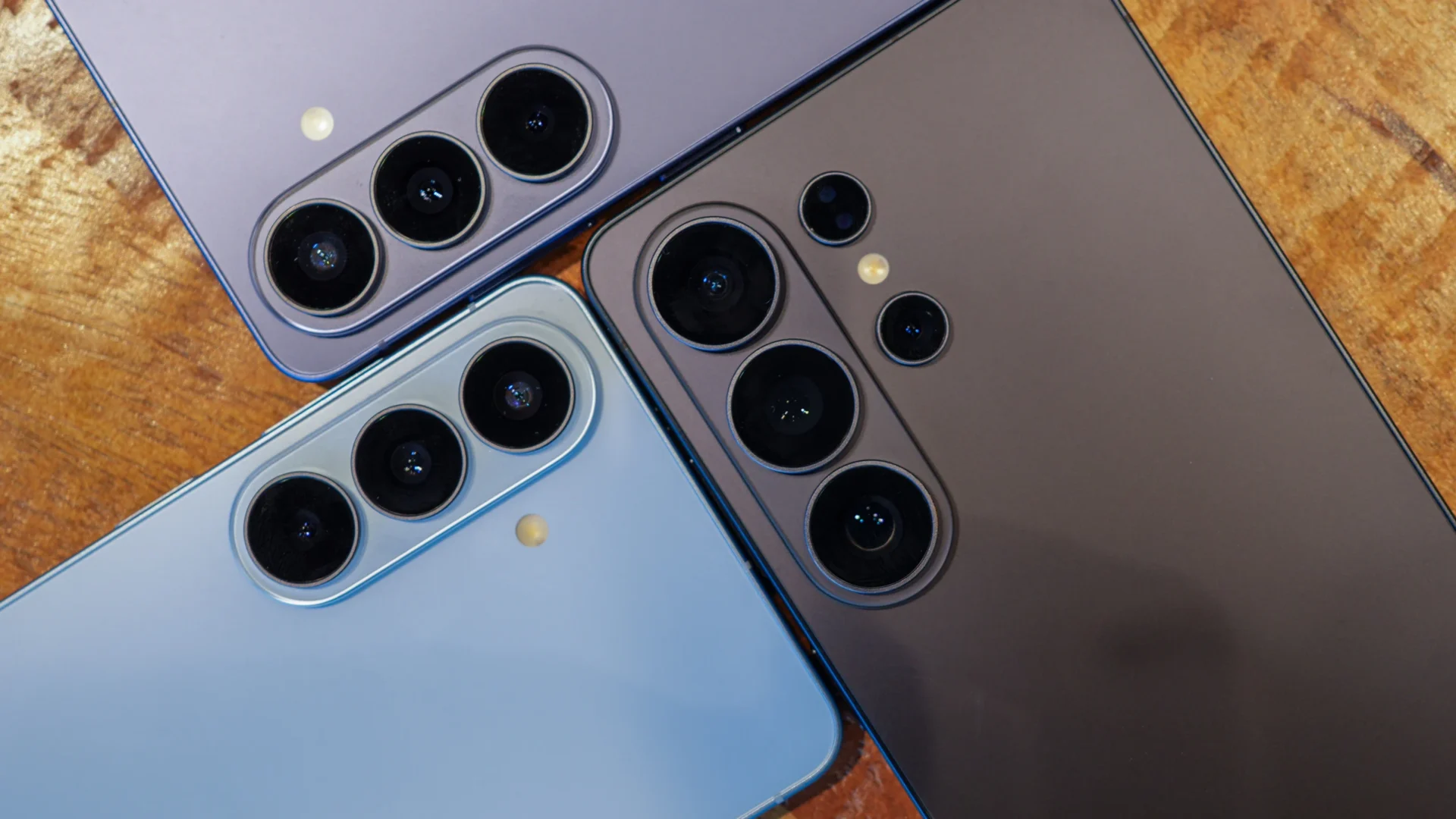

Overview: Samsung’s S26 refresh is incremental—except for pricing
Samsung has officially unveiled the Galaxy S26 lineup at its February Unpacked event in San Francisco, and the headline is familiar: three models, Android 16, and iterative hardware changes. The more notable twist is how those changes map to price.
- Galaxy S26 starts at $899.99 (up $100 vs. the S25), but also bumps the base storage to 256GB.
- Galaxy S26 Plus starts at $1,099.99 (also up $100), with fewer meaningful upgrades compared with last year’s S25 Plus.
- Galaxy S26 Ultra starts at $1,299.99, matching the S25 Ultra’s US launch price, while focusing on premium features like a new Privacy Display, camera tweaks, and faster charging.
Preorders open February 25, with devices shipping March 11. Alongside the phones, Samsung also announced the Galaxy Buds 4 and Buds 4 Pro for the same March 11 release window.
For official product details and regional availability, Samsung’s launch pages on Samsung are the canonical reference.
What’s changed at a glance
The S26 family continues Samsung’s strategy of keeping the overall design language stable while adjusting a few levers each year—display size, battery, connectivity tiers, and “Ultra-only” differentiators.
Key changes versus the S25 generation:
- S26 gets a bigger screen and battery, plus 256GB base storage (up from 128GB on S25).
- S26 loses mmWave 5G support (while S26 Plus and Ultra retain it).
- S26 Plus is largely unchanged year over year, despite the price increase.
- S26 Ultra introduces a Privacy Display (hardware-based angle dimming) and updates camera apertures, while keeping the 5,000mAh battery.
Comparison Table: Galaxy S26 vs. Galaxy S25 series
Below is a consolidated side-by-side view of the main specs across the S26 and S25 lineups.
| Spec | Galaxy S26 | Galaxy S26 Plus | Galaxy S26 Ultra | Galaxy S25 | Galaxy S25 Plus | Galaxy S25 Ultra |
|---|---|---|---|---|---|---|
| OS | Android 16 | Android 16 | Android 16 | Android 16 | Android 16 | Android 16 |
| Display | 6.3-inch OLED | 6.7-inch OLED | 6.9-inch OLED | 6.2-inch OLED | 6.7-inch OLED | 6.9-inch OLED |
| Resolution | 2340×1080 | 3120×1440 | 3120×1440 | 2340×1080 | 3120×1440 | 3120×1440 |
| Refresh rate | Up to 120Hz | Up to 120Hz | Up to 120Hz | Up to 120Hz | Up to 120Hz | Up to 120Hz |
| Dimensions (mm) | 149.6×71.7×7.2 | 158.4×75.8×7.3 | 163.6×78.1×7.9 | 146.9×70.5×7.2 | 158.4×75.8×7.3 | 162.8×77.6×8.2 |
| Weight | 167g | 190g | 214g | 162g | 190g | 218g |
| Battery | 4,300mAh | 4,900mAh | 5,000mAh | 4,000mAh | 4,900mAh | 5,000mAh |
| Processor | Snapdragon 8 Elite Gen 5 | Snapdragon 8 Elite Gen 5 | Snapdragon 8 Elite Gen 5 | Snapdragon 8 Elite | Snapdragon 8 Elite | Snapdragon 8 Elite |
| Storage | 256/512GB | 256/512GB | 256/512GB/1TB | 128/256/512GB | 256/512GB | 256/512GB/1TB |
| RAM | 12GB | 12GB | 12/16GB | 12GB | 12GB | 12GB |
| Rear cameras | 50MP wide + 12MP UW + 10MP 3x | 50MP wide + 12MP UW + 10MP 3x | 200MP wide + 50MP UW + 10MP 3x + 50MP 5x | 50MP wide + 12MP UW + 10MP 3x | 50MP wide + 12MP UW + 10MP 3x | 200MP wide + 50MP UW + 10MP 3x + 50MP 5x |
| Front camera | 12MP | 12MP | 12MP | 12MP | 12MP | 12MP |
| Rear video | 8K30 / 4K60 | 8K30 / 4K60 | 8K30 / 4K120 | 8K24/30 (main) / 4K30/60 | 8K24/30 (main) / 4K30/60 | 8K24/30 (main) / 4K30/60/120 |
| Biometrics | Ultrasonic FP + face | Ultrasonic FP + face | Ultrasonic FP + face | Ultrasonic FP + face | Ultrasonic FP + face | Ultrasonic FP + face |
| Rating | IP68 | IP68 | IP68 | IP68 | IP68 | IP68 |
| Connectivity | 5G (no mmWave) / Wi‑Fi 7 / BT 5.4 | 5G (mmWave) / Wi‑Fi 7 / BT 6 | 5G (mmWave) / Wi‑Fi 7 / BT 6 | 5G / Wi‑Fi 7 / BT 5.4 | 5G / Wi‑Fi 7 / BT 5.4 + UWB | 5G / Wi‑Fi 7 / BT 5.4 + UWB |
| Wireless charging | Yes, 15W | Yes, 20W | Yes, 25W | Yes, 15W (Qi2) | Yes, 15W (Qi2) | Yes, 15W (Qi2) |
| Stylus support | No | No | Yes | No | No | Yes |
| Starting price (US) | $899.99 | $1,099.99 | $1,299.99 | $799.99 | $999.99 | $1,299.99 |
Tech Specs: what the numbers mean in real-world use
Displays and size: S26 gets bigger—whether you wanted it or not
Samsung nudged the base model from 6.2 inches to 6.3 inches, while keeping the Plus and Ultra at 6.7 and 6.9 inches respectively. Resolution and 120Hz refresh ceilings remain consistent across generations.
The practical impact:
- If you liked the S25 specifically for compactness, the S26 is slightly less “small phone” than before.
- The Plus and Ultra are effectively in maintenance mode on size.
Battery: base model finally gets a bump
The base S26 jumps to 4,300mAh from the S25’s 4,000mAh, which is one of the more tangible upgrades in the entire non-Ultra lineup.
- S26 Plus stays at 4,900mAh year over year.
- S26 Ultra stays at 5,000mAh—a capacity that has become the Ultra’s long-running plateau.
Chipset: Snapdragon 8 Elite Gen 5 arrives
All S26 models move to Snapdragon 8 Elite Gen 5 (per the primary comparison table), up from the Snapdragon 8 Elite in the S25 family. If you care about on-device AI features, sustained gaming performance, or long-term OS headroom, the SoC update is meaningful—even if it doesn’t radically change day-to-day tasks like messaging and video.
For readers tracking Qualcomm’s roadmap, Qualcomm is the best place to follow the official platform positioning.
Storage and RAM: the S26’s price hike is partly “prepaid” storage
Samsung’s most defensible move this year is also the simplest: the S26 now starts at 256GB, doubling the S25’s base 128GB.
That matters because:
- Many users hit storage ceilings faster due to 4K/8K video, offline media, and large app caches.
- A higher base tier can reduce the pressure to upsell immediately.
On the Ultra, the 1TB configuration is paired with 16GB RAM, while 256GB/512GB remain 12GB.
Connectivity: the base S26 drops mmWave 5G
One of the most controversial changes is that the Galaxy S26 (base) lists 5G without mmWave, while the S26 Plus and S26 Ultra keep mmWave.
Why this is tricky:
- mmWave’s real-world value is highly location-dependent (dense urban pockets, stadiums, select transit corridors).
- Still, removing a feature while raising price invites scrutiny—especially for buyers on US carriers where mmWave branding is part of the pitch.
Wireless charging: faster on paper, but Qi2 consistency is unclear
Samsung lists higher wireless charging wattages on the S26 family (15W/20W/25W depending on model), while the S25 generation is described as 15W Qi2.
If you’re shopping based on accessory ecosystems—magnetic alignment, car mounts, desk docks—pay attention to how Samsung implements compatibility in practice. (This has been a recurring debate in flagship Android circles.)
Cameras: minimal changes on S26/S26 Plus; Ultra leans into optics
S26 and S26 Plus: essentially the same camera formula
The base and Plus models keep the familiar triple camera layout:
- 50MP wide
- 12MP ultrawide
- 10MP 3x telephoto
If you’re upgrading from an S25 or S25 Plus primarily for photography, the spec sheet suggests you should expect similar output, with improvements likely coming from processing and AI rather than new sensors.
S26 Ultra: Privacy Display steals headlines, but apertures also change
The Ultra retains the big-ticket 200MP main camera and 50MP ultrawide + dual-tele approach, but with notable optical tweaks reported in corroborating coverage:
- The main camera moves to a wider f/1.4 aperture (Samsung claims substantially improved light capture).
- The 5x telephoto shifts to f/2.9, described as brighter than before.
Video capture also differentiates the Ultra: 4K at up to 120fps is listed for the S26 Ultra.
The Ultra’s new Privacy Display: a hardware privacy play
The most distinctive S26-series feature is the Galaxy S26 Ultra’s Privacy Display, described as a hardware-level approach that dims specific pixels when viewed from an angle. The goal is to reduce shoulder-surfing in public spaces.
This matters because privacy features often live purely in software (notification hiding, lock screen controls), but angle-based visibility is fundamentally a display problem. If Samsung’s implementation works as described, it could be one of the more meaningful “quality of life” upgrades for commuters and frequent travelers.
And if you’re thinking about privacy more broadly—especially around account recovery and login security—keep your credentials hygiene up to date. For example, if you’re locked out of email on a new phone, this guide, Forgot Your Outlook Password? Here’s How to Remove or Reset It Easily, can help you regain access quickly.
Pricing: higher entry costs, but the story varies by region
In the US, Samsung’s headline pricing is straightforward:
- S26: $899.99
- S26 Plus: $1,099.99
- S26 Ultra: $1,299.99
However, regional pricing breakdowns suggest a more complex picture influenced by memory pricing and market conditions. In some regions, the base S26 Ultra price is slightly lower than last year, while higher storage tiers can cost more.
Regional snapshot (selected tiers)
- US (12GB/256GB): S25 $860 vs S26 $900; S25 Ultra $1,300 vs S26 Ultra $1,300
- Europe (12GB/256GB): S25 €960 vs S26 €1,000; S25 Ultra €1,470 vs S26 Ultra €1,450
- UK (12GB/256GB): S25 £860 vs S26 £880; S25 Ultra £1,250 vs S26 Ultra £1,280
Which upgrade makes sense?
If you have a Galaxy S25
Upgrading to the base S26 is easiest to justify if you:
- want 256GB without paying for a higher tier,
- value the larger battery, or
- plan to keep the phone long enough that the newer chipset matters.
But if mmWave matters to you (US buyers in particular), the loss of mmWave is a real caveat.
If you have a Galaxy S25 Plus
The S26 Plus looks like the hardest sell: it costs more, while much of the experience appears similar. Unless you’re chasing the newest silicon or carrier deals, the S25 Plus remains competitive on paper.
If you have a Galaxy S25 Ultra
The S26 Ultra’s case hinges on two things:
- Privacy Display (if you work in public spaces or travel frequently)
- camera/charging refinements and potential performance gains
If those don’t matter, the S25 Ultra still sits close enough that upgrade urgency is low.
Availability and ecosystem: Buds 4, Buds 4 Pro, and the broader Samsung stack
Samsung is keeping the launch cadence tight: phones and new earbuds are available for preorder now and ship March 11. If you’re already in the Galaxy ecosystem—tablet, watch, earbuds—the convenience factor will remain a major draw.
For more on Samsung’s broader lineup and software strategy, the official Android ecosystem context is also useful, especially as Android 16 features roll out across OEM skins.
Bottom line
Samsung’s Galaxy S26 lineup is a measured update rather than a reinvention. The base model’s storage and battery upgrades help justify its higher price more than the Plus model’s changes do, while the Ultra once again gets the most distinctive hardware feature—this time in the form of Privacy Display.
For buyers deciding between generations, the practical question is less “Is the S26 better?” and more whether the specific deltas—storage, battery, mmWave, and Ultra-only privacy—match your daily use.
Source: Read Original Article



Leave a Reply